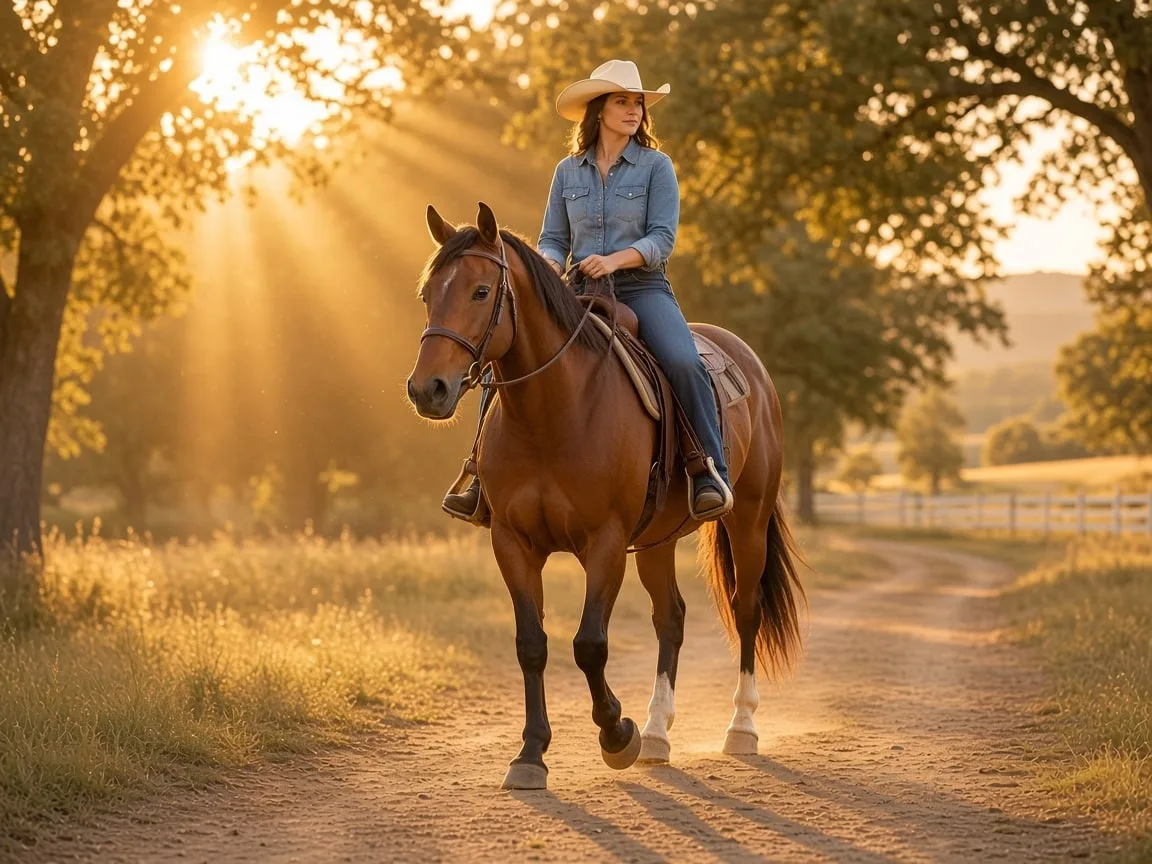
A good trail horse is steady, willing and comfortable with changing terrain. A good trail rider is fit, prepared and realistic about what the horse can do.
Start with fitness
Sources agree that conditioning should be gradual. Build up time under saddle before adding distance or speed, and do not increase both at once. Begin on easy ground before steeper country.
Check health and training first
Before a conditioning program, have your veterinarian rule out lameness or other problems. The horse should also be responsive enough to control safely out on the trail.
Gear and safety
- Check tack before you leave and avoid gear that could hamper a horse in a scramble.
- Carry a first-aid kit for horse and rider, and a lead rope.
- Keep your phone on you, not on the horse.
- Tell someone where you are going.
Rest and recovery
Plan rests and days off, and watch your horse's breathing and recovery during and after rides.
Young and new horses
Choose familiar, forgiving terrain for early rides. New horses need time to learn the routine and the trails.
Choosing a trail horse
Look for listings that describe real trail experience: varied terrain, water crossings, riding alone and in a group. Our trail-experienced horses are easy to find with the Trail filter in the catalogue.
General education written from the published sources below. It is not veterinary or legal advice; check specifics with your own veterinarian and your destination state.