
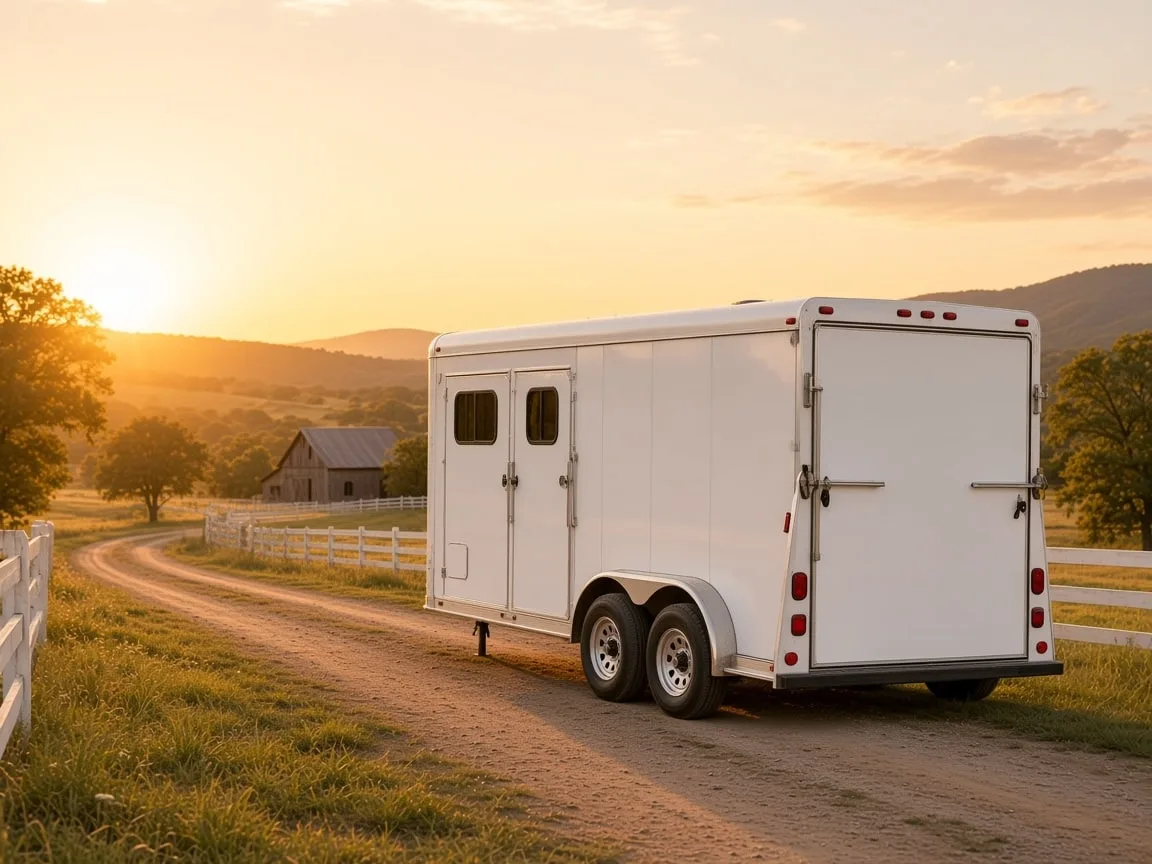
Whether a professional hauler brings your horse or you are collecting a horse yourself, the same principles keep a long trip safe.
Before the trip
- Have a veterinarian check the horse and arrange the required paperwork.
- Pack a first-aid kit and enough hay.
- Consider leg protection suited to your trailer and horse.
Water
Horses that will not drink on the road risk dehydration. Guidance includes carrying water from the horse's usual source and, for fussy drinkers, getting the horse used to a flavored water before travel. If you plan to use electrolytes, ask your veterinarian first.
Rest stops
Sources suggest stops of roughly 30 to 60 minutes so the horse can drink and urinate, and warn against leaving a trailer standing in the sun with no airflow. Many sources advise against unloading at ordinary rest stops unless the location is secure.
How long is too long?
Veterinary advice varies, with some suggesting no more than 8 hours in a stretch and others cautioning against more than 12 to 18 hours without an extended rest. Professional haulers plan overnight stops for long trips.
Ventilation and comfort
Good airflow, shade at stops and limiting heat, noise and vibration all matter.
When the horse arrives
Let the horse rest and drink. After long trips, a veterinarian may suggest giving the horse a few days to recover before asking for work. Follow our first-week guide.
General education written from the published sources below. It is not veterinary or legal advice; check specifics with your own veterinarian and your destination state.